
A Danish education places you in a highly regarded social paradise, consistently ranked #1 in the UN’s Happiness Report since 2012. Studying in Denmark provides a high-quality education in a secure and innovative environment, paving the way for bright future prospects. The country also boasts excellent healthcare, education, and civil liberties, making it one of the safest and most livable nations.
Since Denmark lacks significant natural resources, its main export is knowledge. Its focus on education indicates that Danish education is excellent and emphasizes creativity, innovation, analysis, and critical thinking. Additionally, their universities specialize in sustainability, innovation, entrepreneurship, and global perspectives, and their teaching is grounded in the most recent research. Their daring methodology permeates the educational system as well. By fusing conventional lectures with industry internships, Danish universities encourage self-motivation and problem-based learning, enabling students to apply their knowledge practically and equipping them for the demands of the global labor market.
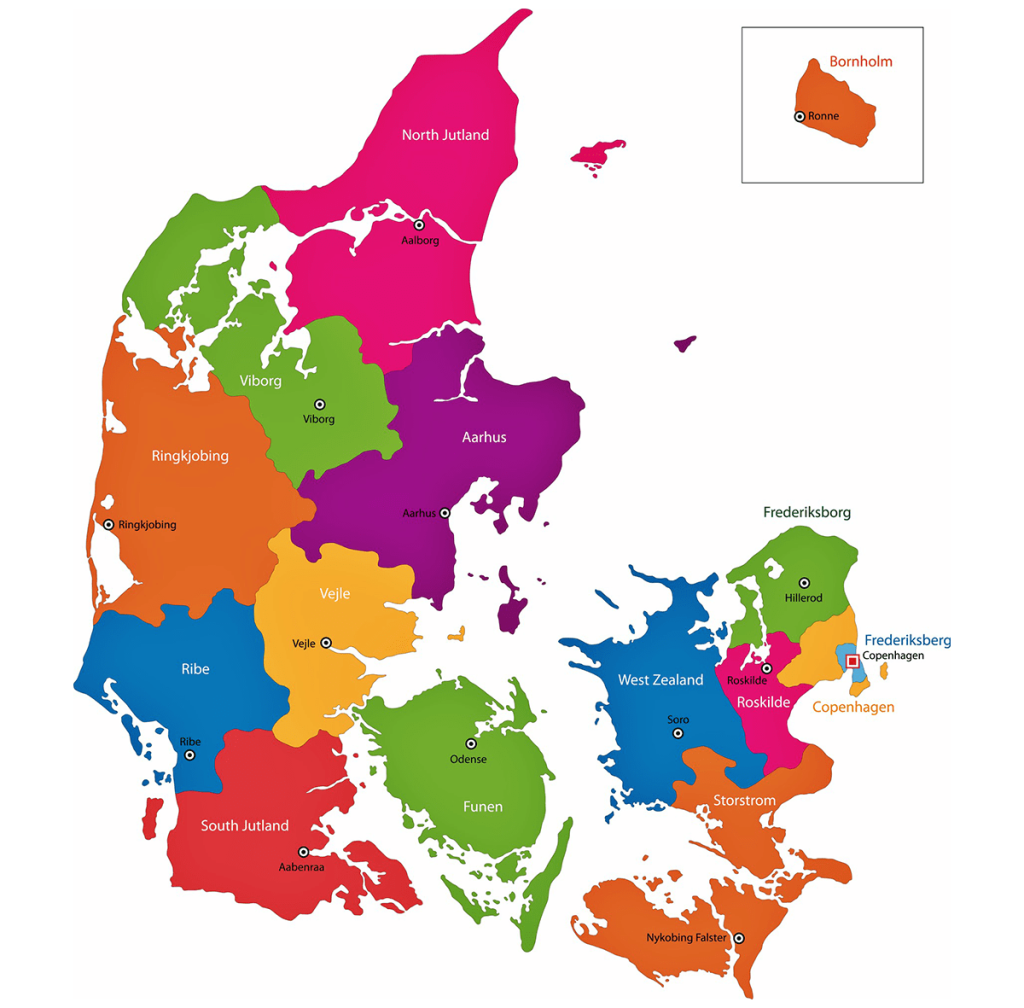
Denmark has several very prestigious universities, such as the University of Copenhagen and the University of Southern Denmark, which are important reasons to study there. Additionally, universities like Roskilde University and Aarhus University are options for students.

Undergraduate: Your degree needs to be equivalent to the Danish upper secondary school graduation certificate.
Graduate: Usually, a valid Bachelor’s degree or its equivalent is necessary.
Academic Performance: In your prior studies, exhibit a strong level of academic performance. This might include reaching minimum GPA criteria (you may have to convert from your grading system).
Certain Requirements: Programs may have certain field-related requirements or course prerequisites.

In general, living expenses in Denmark are expensive. While the suggested monthly budget for smaller towns like Aalborg is about EUR 1,000, living in Copenhagen may cost anything from EUR 1,280 to 1,800 per month.
However, students from Switzerland and the EU/EEA should consider that Danish institutions do not charge tuition for these students, so they save a lot of money in this area.
Several students in Denmark dwell in off-campus residence halls because getting to Danish metropolitan areas is typically simple. Make friends and become settled by living in dorms, especially if it’s your first year. Moreover, residence halls are the least expensive choice; one may expect to pay between EUR 240 and EUR 460 monthly for living in residence halls.
|
|

Through national and European programs, international students can apply for scholarships to study in Denmark as guests, as part of a double or combined degree, or as part of an institutional partnership. However, as part of the Danish Government Scholarship program, institutions in Denmark provide a limited number of scholarships and tuition waivers.
The selected scholarships available are for exceptionally gifted students from non-EU/EEU countries who have excelled academically. Additionally, all approved non-EU/EEA candidates are eligible for scholarships. Danish Government Scholarships are proof of Denmark’s commitment to globalizing diversity and intellectual collaboration. Moreover, through superior education and research opportunities, these scholarships enable international students to succeed in their chosen disciplines and enhance their cross-cultural learning possibilities.
Business & Economics: Well-known universities with business programs include Aalborg University, Aarhus University, and Copenhagen Business School.
Engineering: Aarhus University, Aalborg University, and Technical University of Denmark (DTU) are all excellent in different areas of engineering.
Renewable Energy and Sustainability: Pioneers in sustainability teaching and research are DTU, University of Copenhagen, and Aarhus University.
Medical and Life Sciences: Prestigious medical and life science programs are available.

Online application form
Standardized test scores
Letter of recommendation
Proof of financial Resources
Official transcripts
Motivation letter
Portfolio

All non-EU/EEA/Swiss nationals will require a residence permit to work in Denmark. To work in Denmark, any non-EU, non-EEA, and non-Swiss nationalities will need a residence visa. After completing your degree program and holding a residence permit as a student in a Danish professional bachelor’s, master’s, or doctoral program, you may be eligible to apply for a residence permit, which will allow you to look for work in Denmark for a maximum of three years following your graduation from a Danish higher education institution.
If your passport still has validity, the Danish Agency for International Recruitment and Integration will provide you a 3-year time to look for a job in addition to your study permit.
For EU/EEA and Swiss students, public universities in Denmark do not charge tuition fees. Non-EU/EEA students typically pay between €6,000 and €16,000 annually, depending on the program and level of study. Living expenses in Denmark can range from €800 to €1,200 per month. For detailed guidance on managing your budget and understanding visa requirements, consider consulting with Times Consultant, a specialized Denmark Study Visa Consultant.
To study in Denmark, non-native English speakers generally need a minimum IELTS score of 6.5. However, requirements can vary by institution and program, so it’s important to check specific requirements with the university.
Yes, some universities in Denmark may accept alternative English proficiency proofs, such as TOEFL, PTE, or Cambridge tests. Additionally, if you have completed previous education in English, some institutions might waive the IELTS requirement.
To qualify for permanent residency in Denmark after studying, you must have lived in Denmark for at least 8 years, or 4 years if you meet certain criteria like language skills and employment. Graduates can extend their stay with a post-study work visa, which can be a pathway to PR if employment and integration conditions are met.
Students from the EU/EEA and Switzerland can study for free at public universities in Denmark. Non-EU/EEA students can look for scholarships from the Danish government or individual institutions, which can cover tuition fees and living costs.
Your Australian visa journey starts here. Expert consultation for a smooth application process.
Complete your visa application online: Accurate, secure, and convenient access to global travel.
Confirming authenticity, completeness, and compliance of provided visa documents for accurate processing and approval.
Helping your visa application being processed to know you exact status.
Expert assistance, clear guidance, seamless experience, and dedicated support every step of the way.
Pay the visa agent's fee securely and conveniently, ensuring a smooth visa application process.
We legal assistance to ensure a smooth and successful immigration process for you.
Travel insurance with options for medical, trip cancellation, and lost luggage coverage, ensuring worry-free journeys.

+92 309 3338870